How to Identify Whether Your Lead Problem Is Traffic, Targeting, or Trust

Key Takeaways Most lead generation problems are misdiagnosed, causing teams to fix the wrong thing and waste months. Traffic, targeting, and trust break at different stages of the funnel—and each leaves a distinct data trail. More traffic rarely fixes a broken lead system; it usually amplifies the existing problem. Poor lead quality is almost always […]
Designing Lead Generation for Long-Term Competitive Advantage

Key Takeaways Long-term competitive advantage comes from systems, not campaigns. Most companies confuse activity with strategy in lead generation. Sustainable lead generation must align with business model and growth stage. Short-term wins often hide long-term structural weaknesses. Strategic lead generation compounds value over time instead of resetting every quarter. Introduction: Why Lead Generation Should Be […]
The New Standard for Lead Quality in High-Ticket Services

Key Takeaways High-ticket businesses no longer win by generating more leads, but by attracting the right leads. Lead quality today is defined by intent, timing, and buying readiness—not volume or vanity metrics. Poor-quality leads silently erode revenue, morale, and sales efficiency. High-ticket buyers expect relevance, clarity, and confidence before engaging in conversations. The future of […]
How High-Intent Lead Generation Reduces Discount Pressure

Key Takeaways High discount pressure is usually a lead quality problem, not a pricing problem. Low-intent leads enter sales conversations too early and force price negotiations. High-intent prospects buy outcomes, not discounts. Intent-driven lead systems improve sales leverage and protect margins. Strong qualification frameworks reduce the need to “convince” buyers with price cuts. Introduction: Why […]
Why Lead Generation Strategies Age Faster Than Most Businesses Realize

Key Takeaways Lead generation strategies decay faster than most founders notice—often long before revenue drops. Buyer behavior, not competition, is the primary force accelerating lead gen obsolescence. Metrics like CPL and MQL volume can hide serious performance erosion. Static funnels and outdated ICPs are the biggest silent killers of growth. Sustainable growth requires adaptive systems, […]
Why Lead Nurturing Is Really About Risk Reduction

Key Takeaways Lead nurturing works because it reduces uncertainty, not because it “pushes” prospects to buy Buyers delay decisions when risk feels unclear — not when interest is low Trust, clarity, and consistency lower perceived risk long before sales conversations happen Lead nurturing stabilizes revenue by creating predictability, not just more leads Businesses that treat […]
The Real Difference Between Pipeline Growth and Revenue Growth
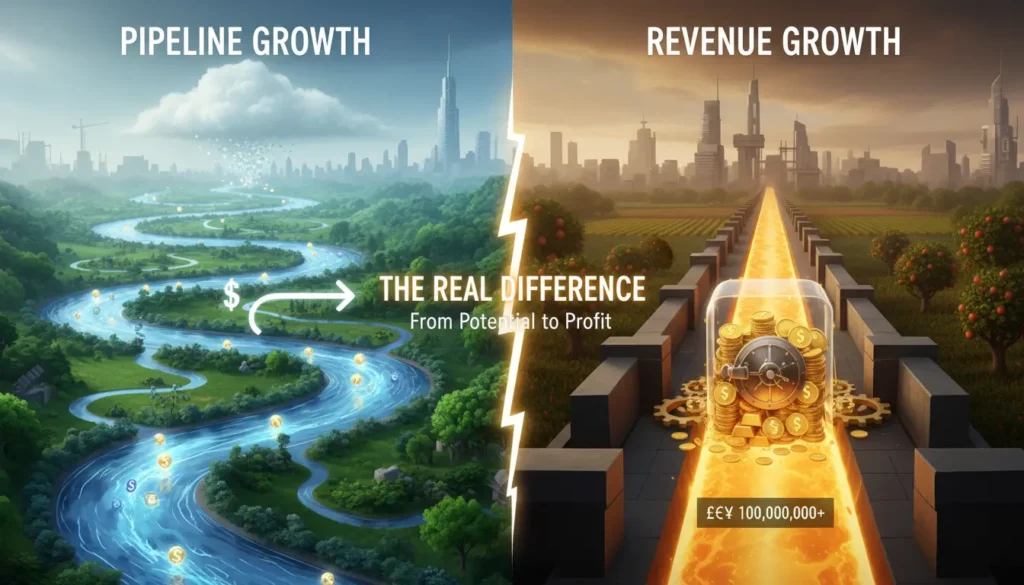
Key Takeaways Pipeline growth and revenue growth are not interchangeable—confusing them leads to missed forecasts and wasted effort. A larger pipeline can mask structural problems like poor qualification, long sales cycles, and weak conversion. Revenue growth depends on efficiency metrics (win rate, velocity, deal size, retention), not just deal count. Pipeline inflation creates false confidence, […]
Designing a Lead Generation Engine That Survives Market Shifts

Key Takeaways Most lead generation failures happen not because of poor tactics, but because the system was never designed to adapt. A resilient lead engine prioritizes stability, feedback loops, and intent, not just volume. Market shifts expose hidden weaknesses such as channel dependency and poor lead qualification. Sustainable growth comes from system design, not constant […]
Why Short-Term Lead Wins Often Create Long-Term Revenue Problems

Key Takeaways Short-term lead wins can create a false sense of growth while quietly damaging long-term revenue health. Optimizing for lead volume instead of lead quality increases churn, sales friction, and acquisition costs over time. Metrics like cost-per-lead often hide deeper issues related to buyer intent, trust, and lifetime value. Over-reliance on quick-win campaigns weakens […]
The Difference Between Demand Creation and Demand Capture in B2B

Key Takeaways Demand creation builds future buyers, while demand capture converts buyers who already have an intent to purchase. Most B2B companies over-invest in demand capture and under-invest in long-term demand creation. Relying solely on high-intent leads can lead to rising costs and unpredictable pipelines. Demand creation shortens sales cycles and improves close rates over […]